
Last updated November 16, 2026
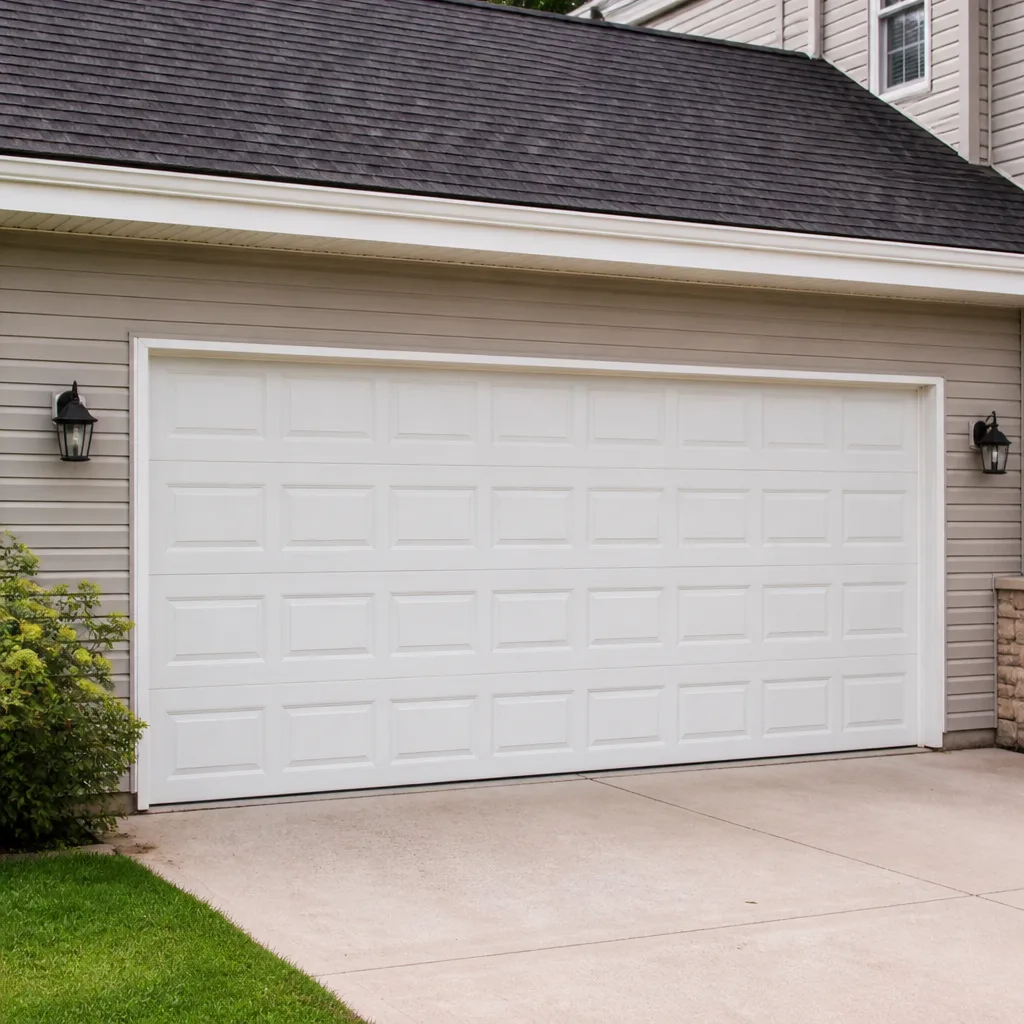 Raised-panel steel
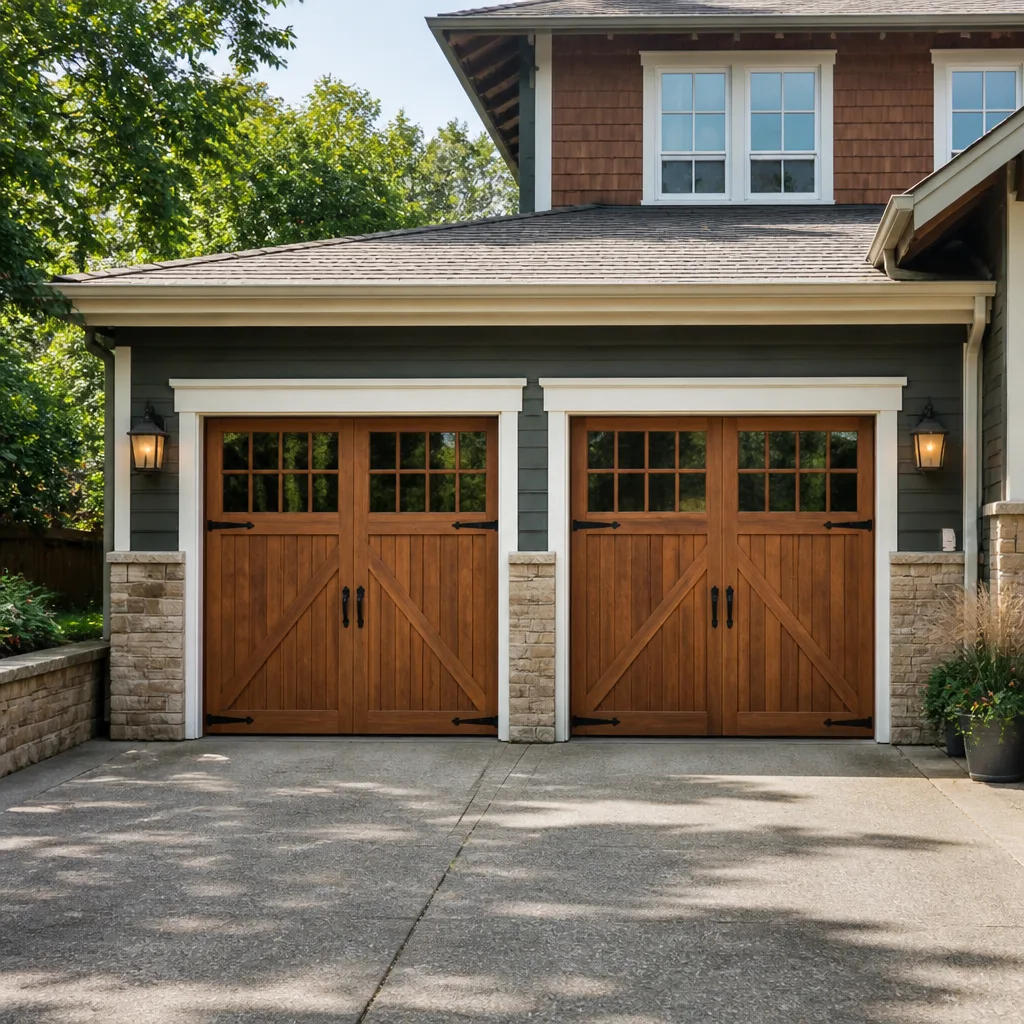 Carriage house
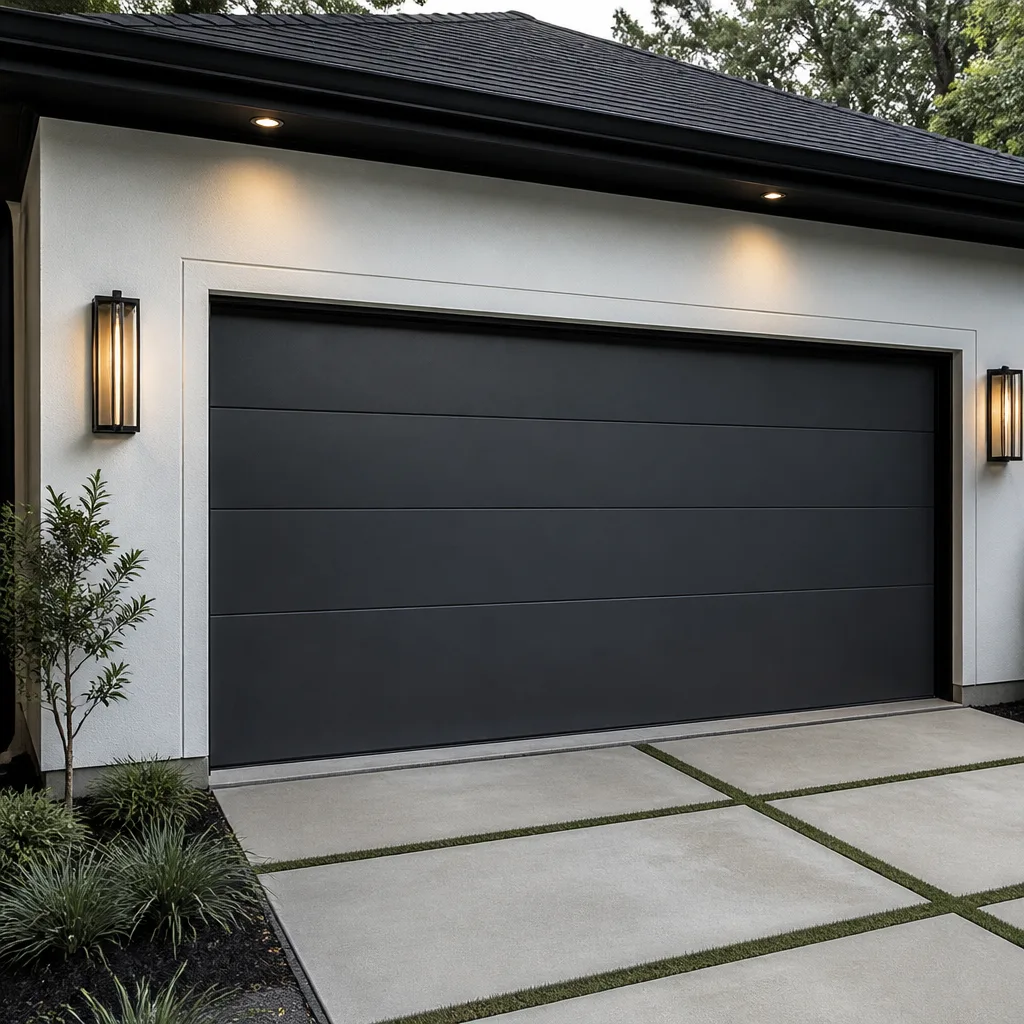 Modern flush
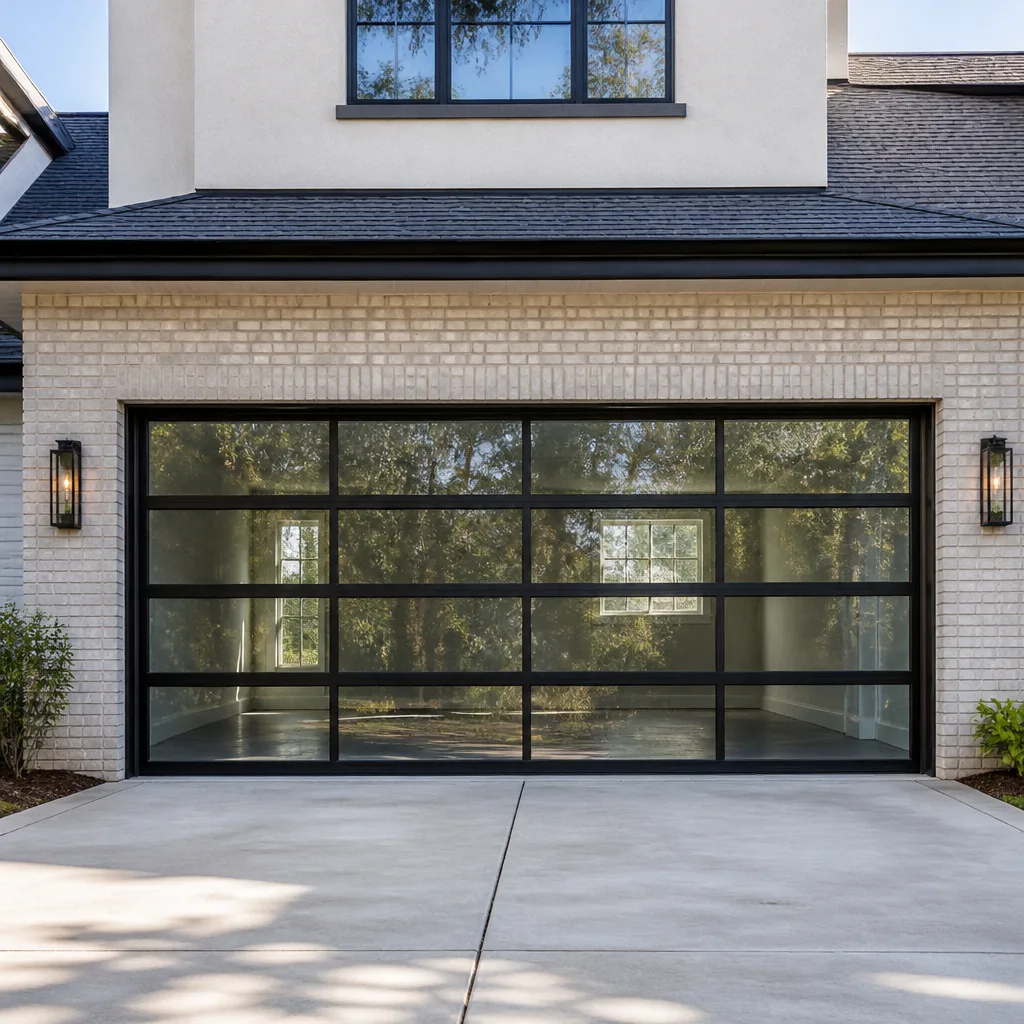 Full-view glass
 LiftMaster openers
 Chamberlain openers
Full 25-point door and opener safety check with every visit - springs, cables, rollers, tracks, and your LiftMaster or Chamberlain opener included
You get a price before we start. It does not change when the pro arrives.
Get your free estimateGarage Door Emergency Preparedness Guide for Durham Homes
When an ice storm knocks out power across Durham, the most common first instinct is to keep pressing the wall button, hoping the door will move. That’s exactly what burns out opener motors. A temporary outage becomes a motor replacement on top of whatever the storm already caused. Most garage door emergencies in Durham aren’t really about the door. They’re about how the first ten minutes get handled. This guide walks through the three categories of failure, what to do in each, how to secure a door safely, and how to document the scene so a technician can diagnose it fast. Read it before you need it.
Quick Answer
A garage door emergency in Durham falls into one of three categories: a door stuck open (a security problem), a door stuck closed (an access problem), or a broken spring or cable (a safety problem). Each one calls for a different response. The wrong response makes things worse. Call Durham Garage Door Service at (844) 460-7528 for a free estimate. We answer 24/7. Fast dispatch, 7am-7pm.
Styles & brands we work with
- Raised-panel steel
- Carriage house
- Modern flush
- Full-view glass
- LiftMaster openers
- Chamberlain openers
Table of Contents
- The Three Kinds of Garage Door Emergencies in Durham
- What to Do When You Lose Power During a Storm
- Door Stuck Open: How to Secure Your Home
- What to Do in the First Ten Minutes After a Spring Snaps
- Manual Release: The Specific Mistakes That Damage the Mechanism
- How to Document the Failure Before Help Arrives
- What Realistic Response Times Look Like During a Storm Surge
- Why Brand Knowledge Shortens Diagnosis
The Three Kinds of Garage Door Emergencies in Durham
Durham’s weather swings hard: humid summers, occasional ice storms, and the kind of wind that comes through with a summer thunderstorm. Your garage door sits on the front line of all of it. When something fails, the first thing to identify is which kind of emergency you’re dealing with, because the right response to one is often the wrong response to another.
Category 1: Security emergency (door stuck open). The door won’t close, or it’s stuck partway up. Your home is exposed. The urgent job is securing the opening, not forcing the door down. Forcing a door with a damaged cable or bent track can drop it.
Category 2: Access emergency (door stuck closed). The door won’t open. Your car is trapped, and if your garage is your primary entry, so are you. The urgent job is getting the manual release engaged correctly so you can get in and out safely until a technician arrives.
Category 3: Safety emergency (broken spring or cable). You heard a loud bang from the garage. The door may be sitting uneven or hanging by one side. This is the most dangerous category. Springs and cables are under extreme tension, and the door itself can be unsupported. Do not touch the door. Call for help.
Most people treat all three the same way: press the button, then force it, then panic. In our experience, that sequence is what turns a repairable problem into a bigger one. Identify the category first. Every step after that depends on it.
What to Do When You Lose Power During a Storm
Power outages are part of life in Durham, especially during summer storms and the occasional winter ice event. When the power goes out, your garage door becomes a manual door. The opener motor is dead, but the door itself is fine. The mistake is treating the wall button like a reset switch.
Here’s what actually happens when you press the wall button repeatedly during an outage: nothing, because there’s no power. When power returns, the opener may cycle the door unexpectedly. And if the outage is partial or the motor is already stressed, repeated presses can contribute to motor or logic board failure. That’s the $400 repair on top of a $0 inconvenience.
What to do instead:
- Stop pressing the button. Once you’ve confirmed the opener has no power (no light, no sound), leave it alone.
- Find the manual release cord. It hangs from the opener trolley, usually red, usually with a handle. It’s the only correct way to disengage the door.
- Pull straight down, firmly, once. Don’t yank or angle it. A straight pull disengages the trolley from the carriage.
- Lift the door by hand. A properly balanced door should lift with moderate effort. If it’s extremely heavy, stop and call for help. That’s a sign of spring or balance trouble.
- Prop or secure the door if you leave it open. Don’t rely on the opener to hold it.
- Re-engage the release when power returns. Pull the cord again or cycle the opener once, following the manufacturer’s instructions for your brand.
If you have a LiftMaster or Chamberlain opener with a battery backup, the door may still operate during an outage. Check whether your unit has that feature before assuming you’re without power. If you’re not sure what you have, our garage door opener repair team can identify your system and explain its features.
Door Stuck Open: How to Secure Your Home
A door stuck open is a security emergency. Your home is exposed, and depending on where you live in Durham, that matters more at some hours than others. The goal is to secure the opening without putting pressure on a damaged component.
First, diagnose why it’s stuck. Is the door off its track? Is a cable visibly loose or hanging? Is the door hanging unevenly? If you see a loose cable, a bent track, or an uneven door, do not force it. The door could come down.
If the door is stuck open but appears structurally intact, here’s how to secure it:
- Lower the door manually if it’s safe to do so. Disengage the opener with the manual release and guide the door down slowly by hand. A balanced door should come down with control. If it drops or runs away from you, let go and step back.
- Lock it in position. Once the door is down, engage the manual lock if your door has one. Many older doors have slide bolts or a lock bar that secures the door to the track. Use those, not the opener.
- Don’t wedge anything under a damaged panel. Pressure on a bent panel or a compromised cable can cause a sudden failure.
- If the door can’t be lowered safely, secure the opening another way. A temporary barrier across the opening, plus a call for same-day service, is better than forcing a damaged door.
If you’re a landlord or property manager maintaining multiple units in Durham, a stuck-open door is a liability issue as much as a repair issue. Getting a technician out the same day matters. Call (844) 460-7528. We answer 24/7. Fast dispatch, 7am-7pm, Sunday through Friday.
What to Do in the First Ten Minutes After a Spring Snaps
You’ll know it when you hear it: a sharp, loud bang from the garage, often followed by the door sagging or the opener running but the door not moving. A torsion spring has snapped. This is a safety emergency, not an access one. The single most important thing in the first ten minutes is to not touch the door.
Torsion springs and the cables attached to them are under extreme tension. A snapped spring can release stored energy suddenly. A cable under tension can whip. The door itself, with one spring broken, may be supported on only one side and can come down unevenly.
What to do:
- Don’t try to open the door manually, even a few inches. With one spring gone, the door is unbalanced. It can drop or twist in the track.
- Don’t touch the springs or cables. Even a door that looks “settled” can have stored tension in the remaining spring or the cables.
- Keep everyone out of the garage, including kids and pets. If your car is inside, leave it. A trapped car is an inconvenience. A dropped door is a serious injury.
- Take photos from a safe distance. Wide shot of the door, close-up of the spring area (from a few feet back), the track, and the opener.
- Call for a technician. Spring replacement is not a DIY job for anyone who isn’t trained on the specific hardware. We’ll give you a free estimate and a written price before any work starts.
Our technicians have up to 15 years of experience with torsion and extension spring systems across LiftMaster, Chamberlain, Genie, Clopay, Amarr, Wayne Dalton, Craftsman, and Raynor doors and openers. That includes older mechanical systems as well as newer units.
Manual Release: The Specific Mistakes That Damage the Mechanism
The manual release cord is a simple mechanism, and that’s exactly why people break it. The cord pulls a trolley release arm that disengages the door from the opener carriage. Pull it straight down and it works. Pull it wrong and you can bend the release arm, jam the trolley, or leave the door stuck engaged.
Here are the mistakes that cause the most trouble:
- Pulling at an angle. The release needs a straight, vertical pull. Angling it can bend the release arm and leave the trolley stuck in a half-disengaged state.
- Yanking or jerking. One firm pull is enough. Repeated jerks can damage the trolley or the carriage.
- Pulling while the door is partly open under opener power. Disengage only when the door is fully closed or fully open and the opener is off.
- Re-engaging with the door open. The carriage needs to re-engage with the trolley at a specific position. If you cycle the opener while the door is open and the release is disengaged, you can damage the mechanism.
- Forgetting the cord is pulled. If the door gets run up and down with the release disengaged, the trolley can slam into the opener head. That’s an opener repair, not a door repair.
- Assuming every opener has the same release. A LiftMaster or Chamberlain smart opener may have a slightly different release or an electronic disengagement. A Craftsman or Genie legacy unit usually has the standard cord. Check yours before you need it.
If you’ve already damaged the release mechanism, don’t force it further. Call Durham Garage Door Service for garage door repair. We can often repair the trolley or carriage without replacing the whole opener, and we’ll tell you honestly if a replacement makes more sense.
How to Document the Failure Before Help Arrives
Photos taken before the technician arrives do two things: they speed up diagnosis, and they settle any question of what caused the damage. That second part matters for landlords and property managers especially, but it also protects homeowners in any dispute about pre-existing wear versus storm damage.
What to photograph:
- A wide shot of the whole door from outside, showing the door’s position.
- A wide shot from inside the garage, showing the door, tracks, and opener.
- The spring area, from a few feet back. Don’t get close to a broken spring.
- The cables where they attach to the bottom brackets and drums.
- The opener head and rail, including the model label if you can see it.
- The wall button and any remotes if the problem is opener-related.
- Any visible damage: bent track sections, dents, the door’s position relative to the frame.
Write down what you heard or saw when it failed: a bang, a grind, a pop, the door stopping mid-cycle, the opener running with no movement. These details narrow the diagnosis fast. A technician who knows the failure happened with a bang and a sagging door is already expecting a spring issue. One who hears “it just stopped” is looking at the opener or the safety sensors.
What Realistic Response Times Look Like During a Storm Surge
Durham storm surges are real. When an ice storm or a strong line of thunderstorms takes out power across a wide area, the number of garage door failures goes up at the same time. Multiple homes lose power, openers get cycled too many times, and doors end up in odd positions.
Honest talk about timing: during a surge, calls stack up. Technicians are working through a list, not arriving instantly. The realistic expectation during a heavy storm is that some calls will be handled same-day and some will run into the next opening.
What we can tell you is how to make the wait shorter and safer:
- Call early. The sooner a call is logged, the sooner it’s in the queue.
- Describe the category. Tell us if the door is stuck open, stuck closed, or if a spring broke. We triage safety emergencies first.
- Have photos ready. A few clear shots save a diagnostic step.
- Secure the opening while you wait. Follow the steps above. A door that’s safely secured can wait a few hours. A door that’s being forced can’t.
Call (844) 460-7528. We answer 24/7. A call outside dispatch hours is booked into the next opening, Sunday through Friday, 7am to 7pm. We’re closed on Saturday, so a failure that happens on a Saturday gets booked for Sunday.
Why Brand Knowledge Shortens Diagnosis
Every major garage door brand has its own failure patterns, its own opener electronics, and its own quirks in the manual release. A technician who works on your specific brand diagnoses faster and gets the right fix on the first visit. A generalist who has to look up the manual on-site adds time and often adds a return visit.
We’re equipped to service eight of the most widely installed brands in the U.S.: LiftMaster, Chamberlain, Genie, Clopay, Amarr, Wayne Dalton, Craftsman, and Raynor. That covers the large majority of doors and openers on homes and rentals throughout Durham, from older Craftsman and Genie mechanical units to newer Wi-Fi-enabled LiftMaster and Chamberlain openers.
That coverage matters in a few ways:
- Faster diagnosis. We know what a Clopay torsion setup looks like compared to an Amarr extension spring system.
- Fewer return visits. The right part gets ordered the first time.
- Honest advice on repair vs. replace. Because we do installation as well as repair, we can tell you when a Wayne Dalton or Raynor door is worth fixing and when a replacement makes more sense.
- Legacy system support. Older Craftsman and Genie openers aren’t turned away because of age.
If you’re not sure what brand you have, that’s fine. The label is usually on the opener head or on the door’s bottom bracket. Take a photo and we’ll identify it.
Common Mistakes to Avoid
- Pressing the wall button repeatedly during a power outage. The opener won’t work without power, and the repeated presses can contribute to motor or logic board trouble when power returns. Leave the button alone and use the manual release.
- Forcing a door that’s off its track or has a damaged cable. A door that’s partly off the track can come down. Call for same-day repair instead of trying to muscle it back.
- Opening the door manually after a spring snaps. This is the single most dangerous mistake in this guide. With one spring broken, the door is unbalanced and can drop or twist. Keep it closed.
- Pulling the manual release at an angle. The release arm bends easily. Pull straight down, one firm pull.
- Leaving the door open without a lock during the wait. If the door can be lowered, lower it and lock it. An exposed garage in Durham is a security gap, not just a repair waiting to happen.
- Skipping the photos. A few clear shots before the technician arrives prevent disputes over what caused the damage and speed up the diagnosis.
- Taking the lowest quote without a written estimate. Get the price in writing before any work starts. That’s what prevents an invoice surprise.
See the difference
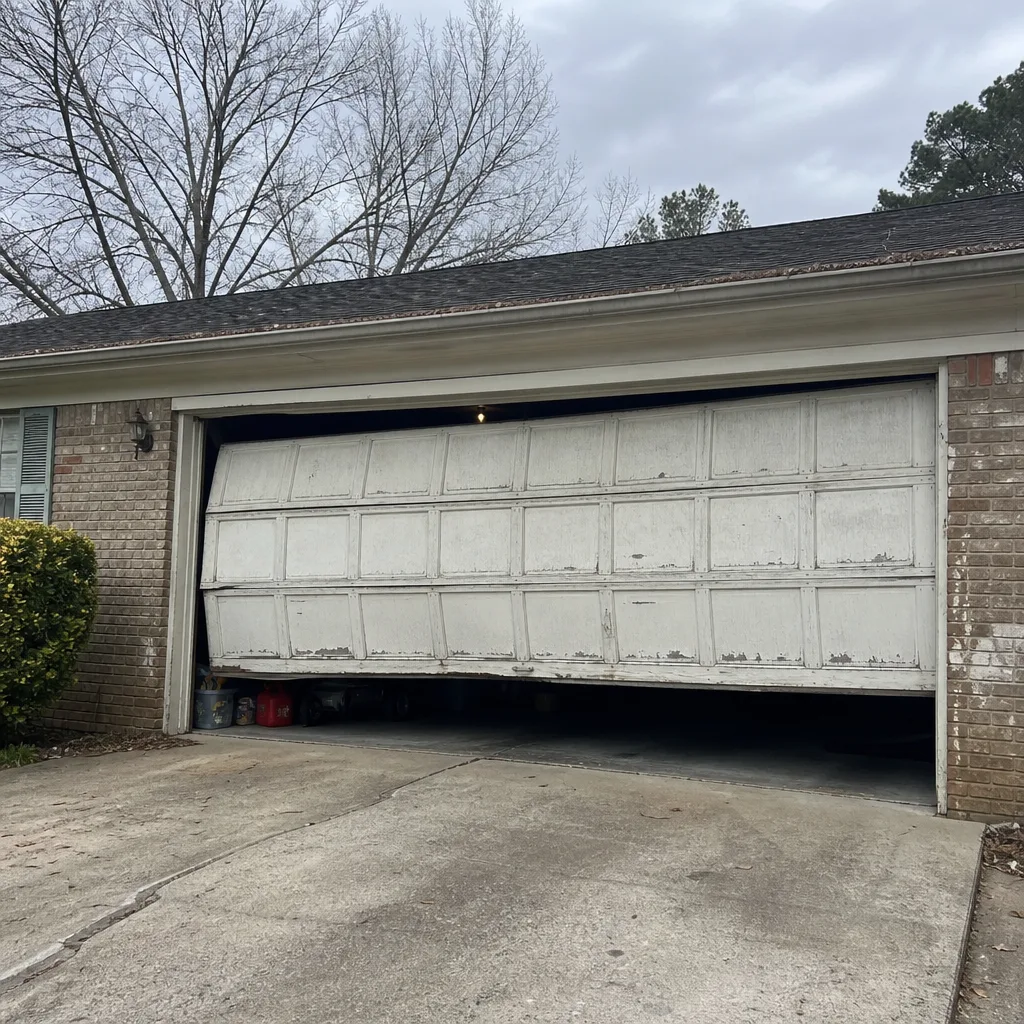 Before
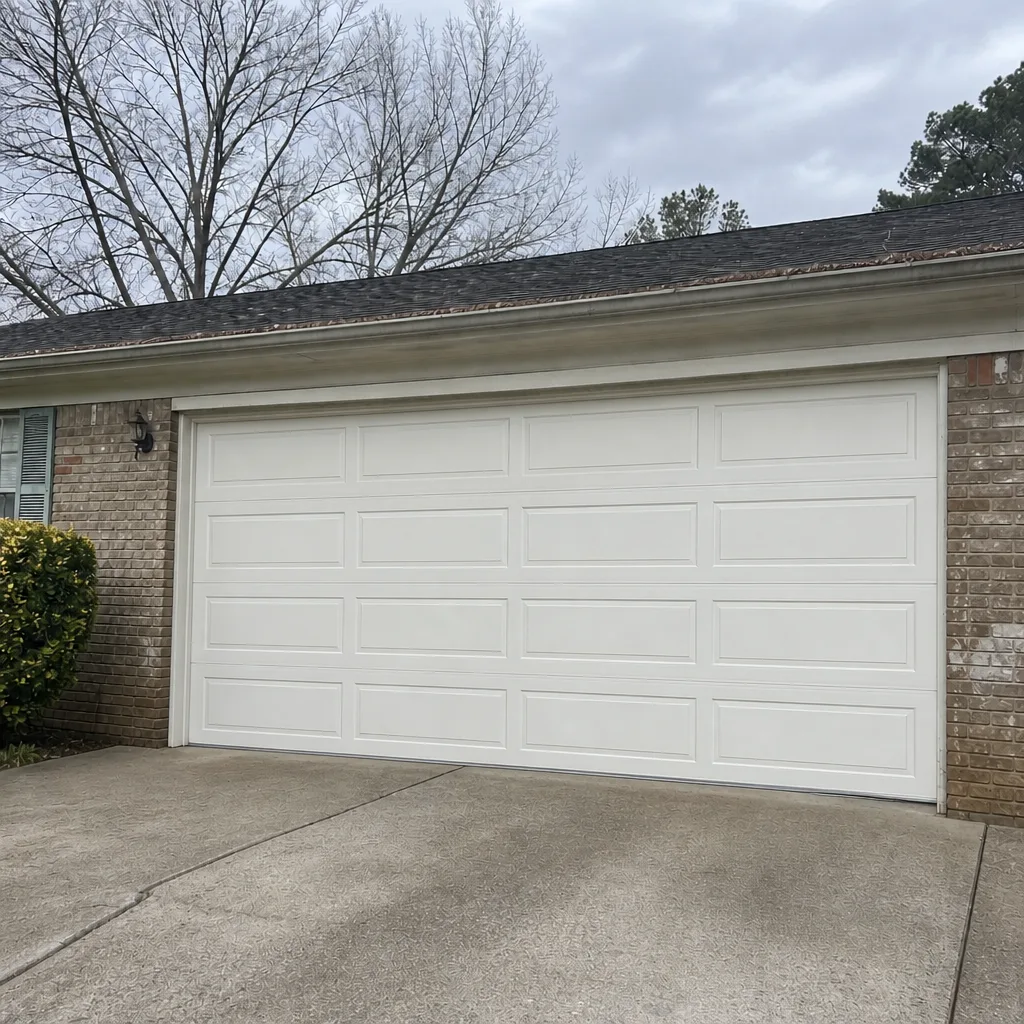 After
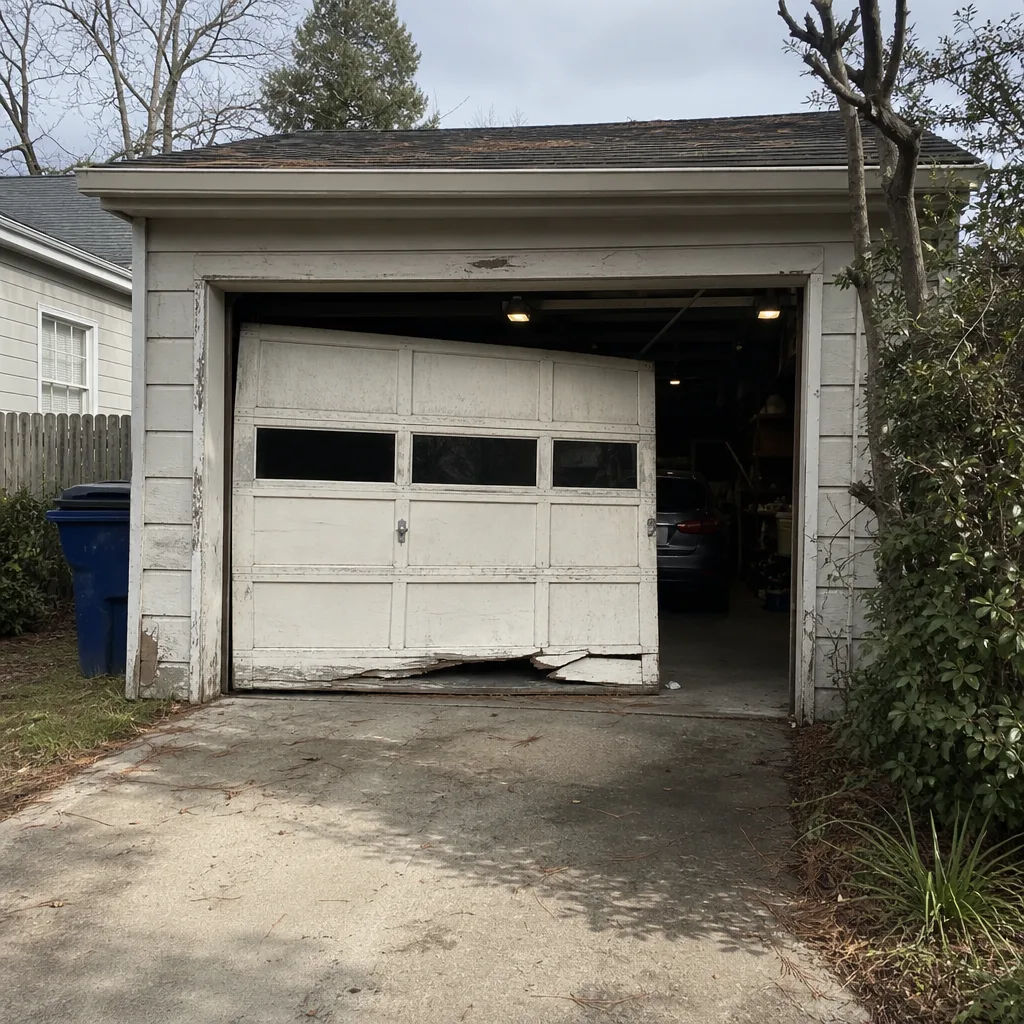 Before
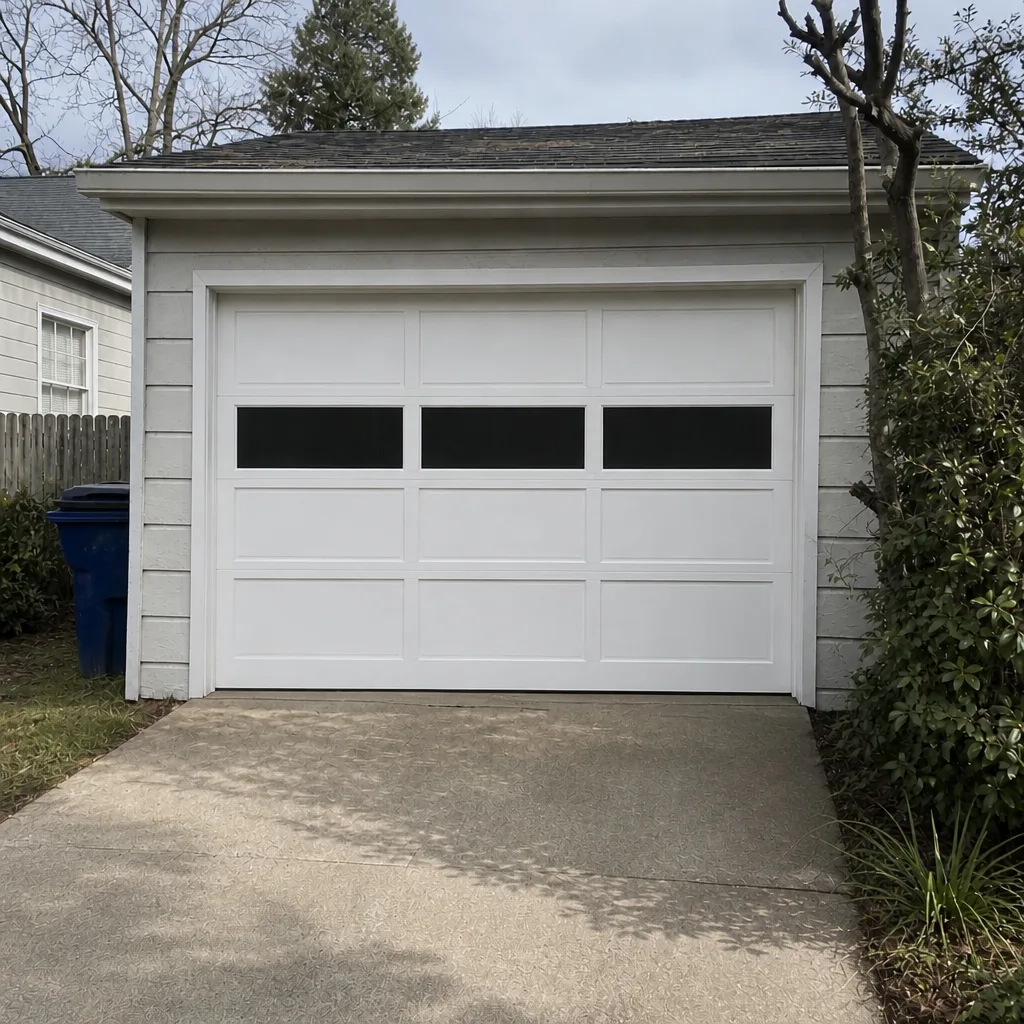 After
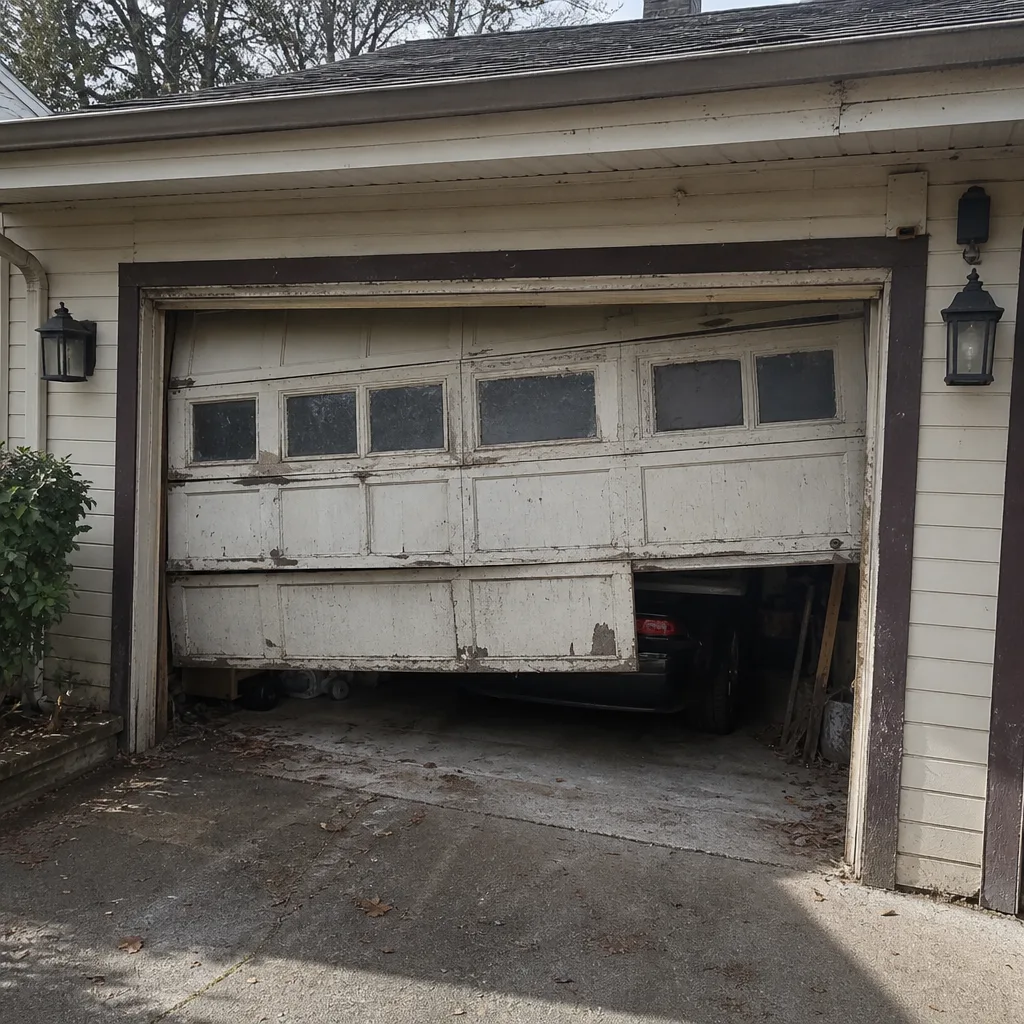 Before
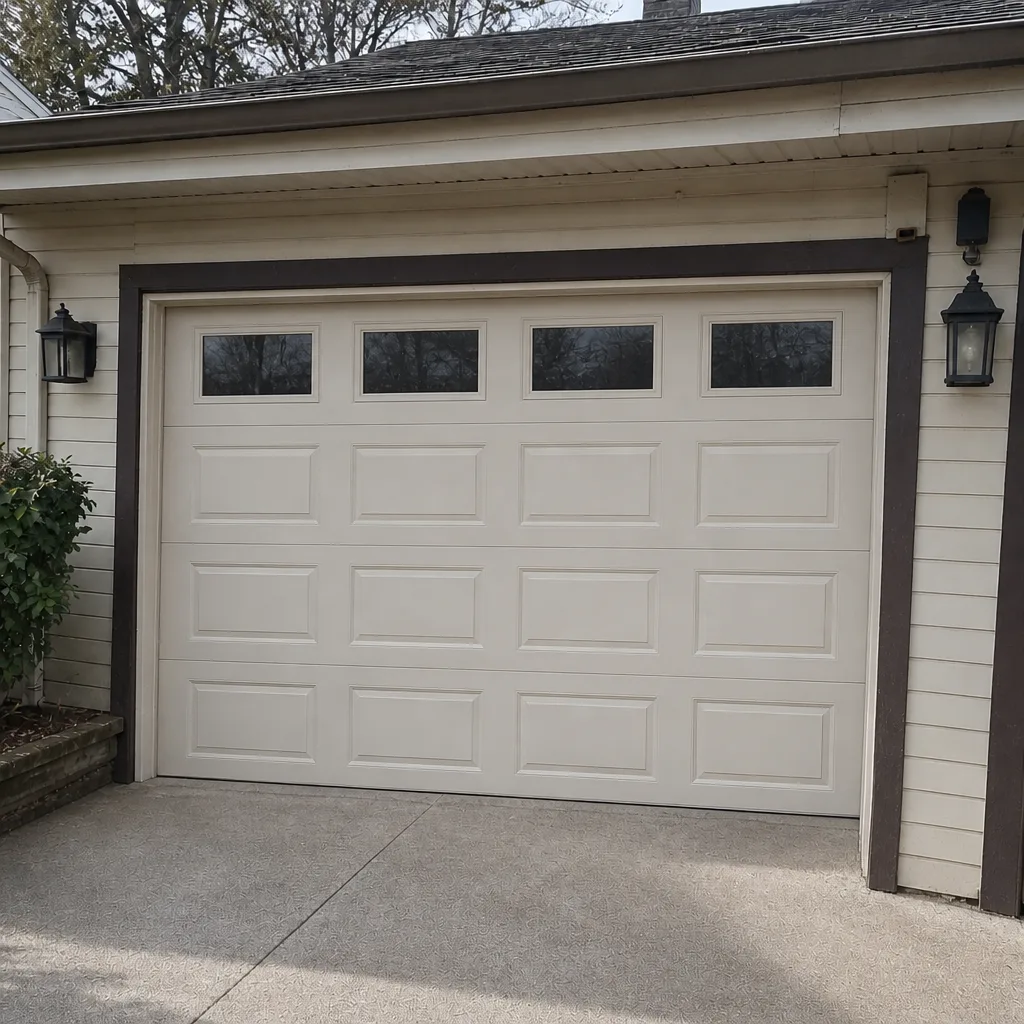 After
When to Call a Professional
Call a professional for any spring or cable failure, any door that’s off its track, any opener that’s cycling erratically or running without moving the door, and any door that’s stuck in a position that exposes your home. Also call if the door reverses repeatedly, if the safety sensors are misaligned after a bump, or if you hear grinding or popping that wasn’t there before. These are the failures where a DIY attempt is most likely to cause injury or add cost.
Durham Garage Door Service offers free estimates in Durham. Call (844) 460-7528. Our technicians have up to 15 years of experience, and we work on the brand you already own. We can work with your insurer on storm-related damage. The price is quoted and agreed before any work starts, and the written estimate sets the final price. For a broader look at our service, visit our Durham Garage Door Service page.
Frequently Asked Questions
Do not touch the door or the spring, and do not try to open the door manually. A snapped spring leaves the door unbalanced, and the remaining components are under tension. Keep everyone out of the garage, take photos from a safe distance, and call a technician. Call (844) 460-7528 for a free estimate.
Use the manual release cord hanging from the opener trolley. Pull it straight down once, then lift the door by hand. If the door is extremely heavy or uneven, stop and call for help. That’s a sign the springs or balance are compromised. Call (844) 460-7528 – we answer 24/7.
No. An open door exposes your home. If the door can be lowered safely by hand, do that and engage any manual lock. If it can’t be lowered, use a temporary barrier and call for same-day service. Call (844) 460-7528. Fast dispatch from 7am to 7pm, Sunday through Friday.
A power surge or repeated button pressing during an outage can sometimes affect the opener’s logic board or motor. It can also be as simple as the opener needing a reset or the safety sensors needing realignment. Either way, a technician can diagnose it quickly. We work on LiftMaster, Chamberlain, Genie, Craftsman, and other major openers. Call (844) 460-7528 for a free estimate.
It depends on the category. A spring replacement or a straightforward opener repair is usually handled in one visit. A door off its track or a damaged panel can take longer if parts need to be ordered. During a storm surge, wait times run longer. The written estimate will tell you what’s involved before any work starts. Call (844) 460-7528.
Yes. Our opener expertise covers both modern Wi-Fi-enabled systems and older mechanical units, including legacy Craftsman and Genie openers. We also work on Clopay, Amarr, Wayne Dalton, Raynor, LiftMaster, and Chamberlain products. Age alone isn’t a reason we’d turn a job away. Call (844) 460-7528 for a free estimate.
The Bottom Line
Garage door emergencies in Durham come down to three categories, and each one has a different right answer. A door stuck open is a security problem: secure the opening without forcing it. A door stuck closed is an access problem: use the manual release correctly. A broken spring is a safety problem: don’t touch the door. The mistakes that turn a repair into a bigger bill are the same every time: pressing the button too many times, forcing a compromised door, or pulling the release at an angle. Know your brand, know your release, and keep your photos. For any emergency, Durham homeowners and property managers can call Durham Garage Door Service at (844) 460-7528 for a free estimate. We answer 24/7. Fast dispatch, 7am-7pm, Sunday through Friday. We’re closed Saturday. The price is quoted and agreed before any work starts.
Contact
If your door is stuck, your spring has snapped, or your opener threw a fault during the last storm, call Durham Garage Door Service at (844) 460-7528 for a free estimate. We answer 24/7. Fast dispatch, 7am-7pm, Sunday through Friday, closed Saturday. Free estimates, a written price before any work starts, and technicians who know your brand.
Written by the team at Durham Garage Door Service.