
Last updated November 16, 2026
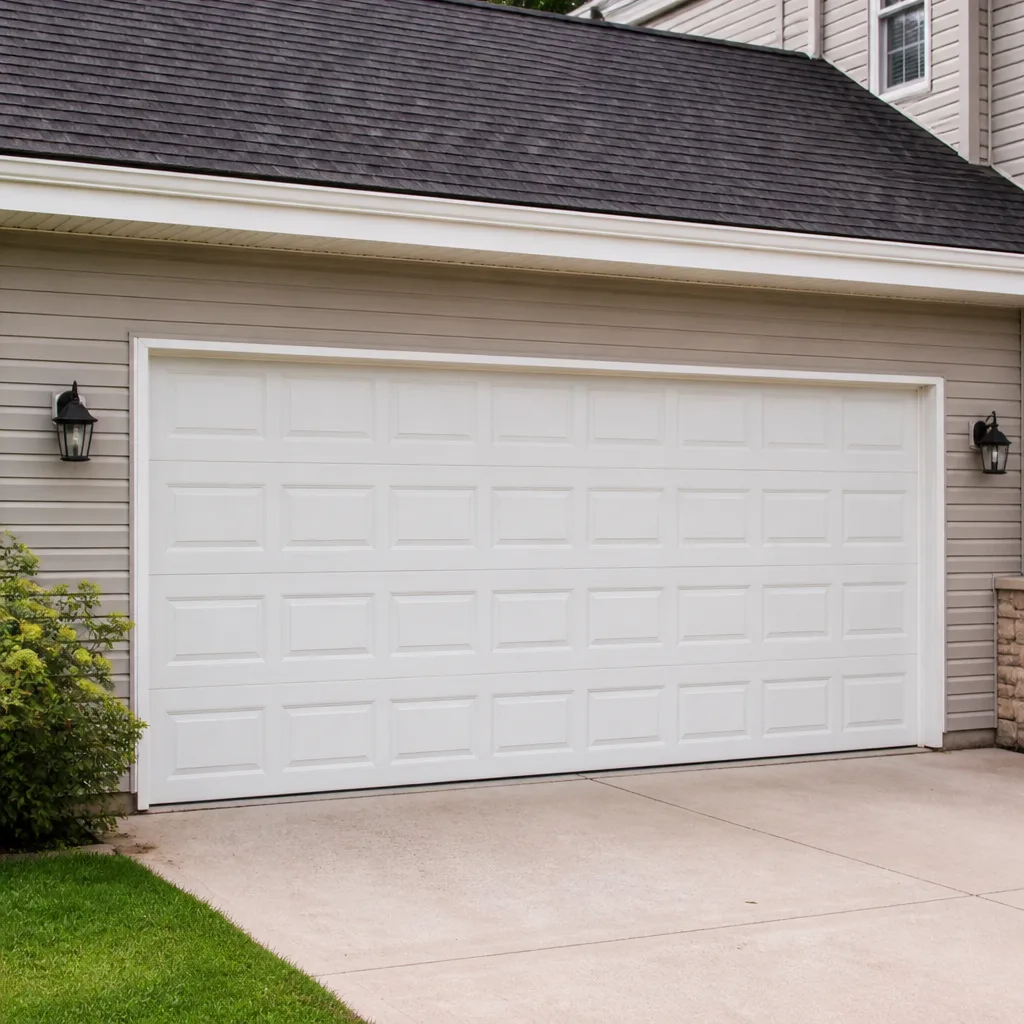 Raised-panel steel
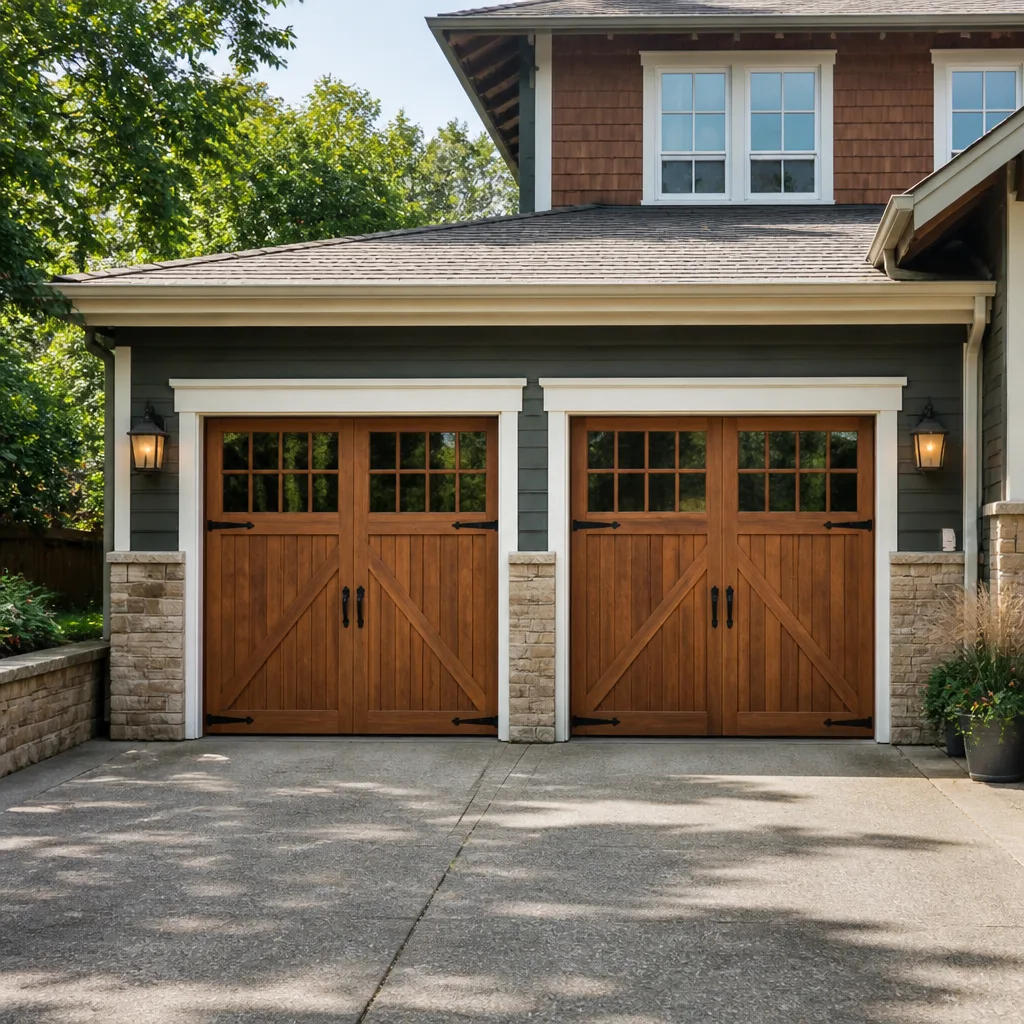 Carriage house
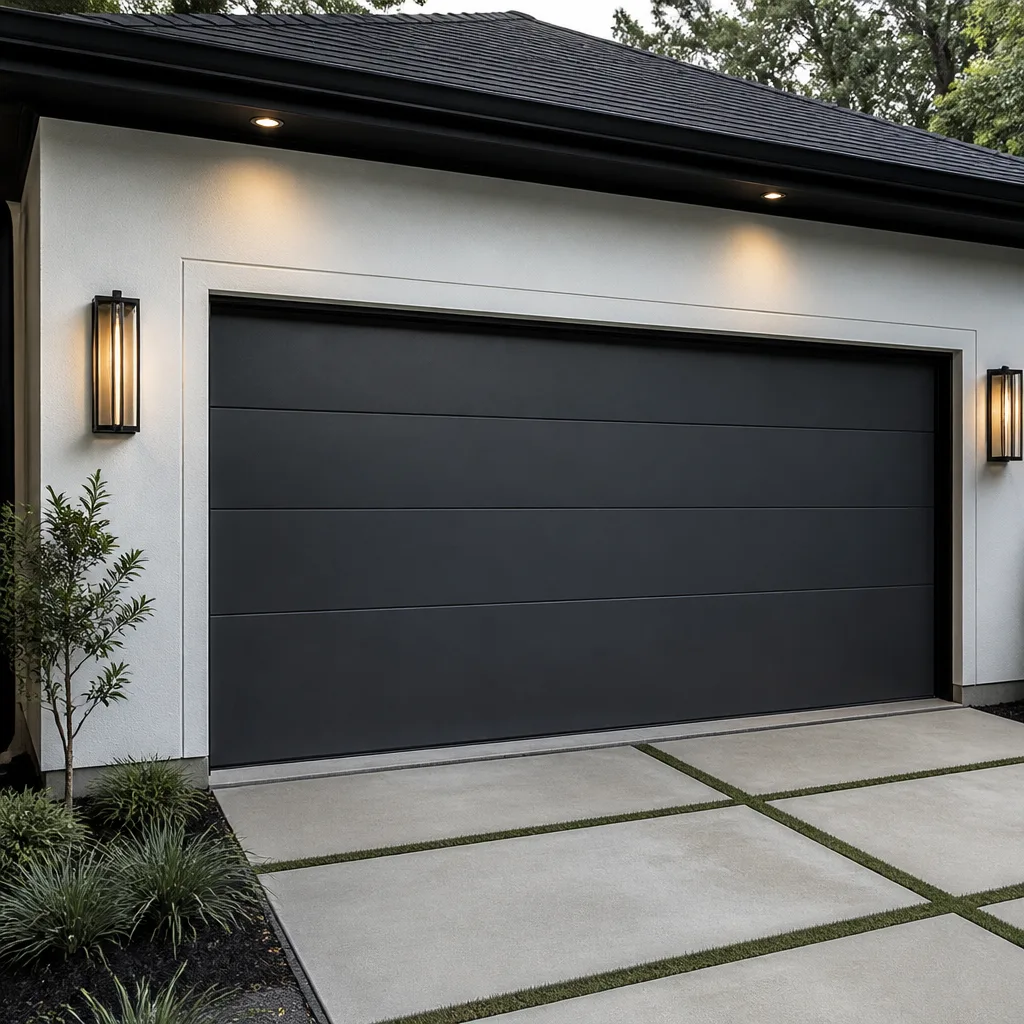 Modern flush
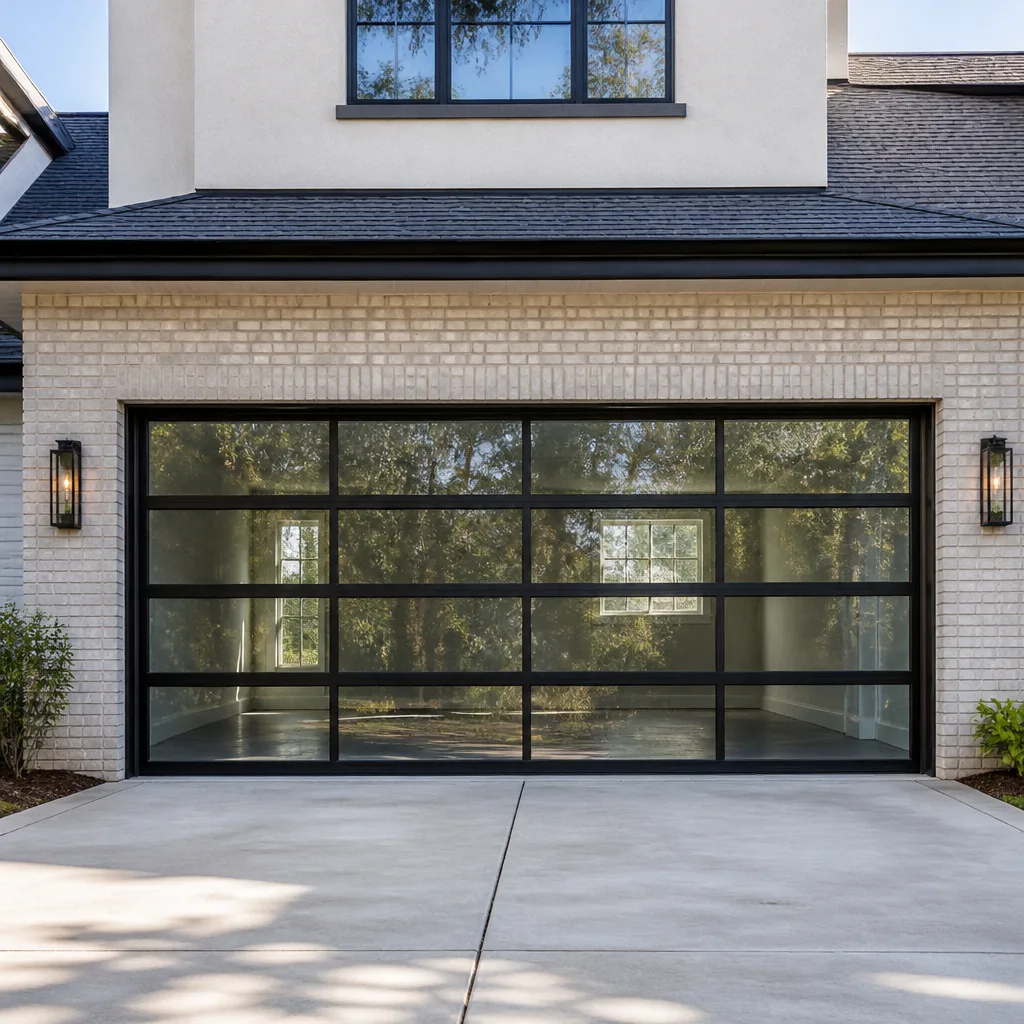 Full-view glass
 LiftMaster openers
 Chamberlain openers
Full 25-point door and opener safety check with every visit - springs, cables, rollers, tracks, and your LiftMaster or Chamberlain opener included
You get a price before we start. It does not change when the pro arrives.
Get your free estimateSeasonal Garage Door Care for Durham: Year-Round Homeowner’s Guide
Durham averages fewer than 5 inches of snow in a typical year. You’d think that makes garage doors here easy on hardware. It’s the opposite. Because winter rarely forces the issue, most homeowners in Durham never build the cold-weather habits that people in Buffalo or Minneapolis pick up out of necessity, and that’s exactly when a torsion spring snaps on a 30-degree morning. Durham sits in a climate transition zone where January swings from 65°F to freezing rain inside a week. Garage door hardware fails in predictable ways at each transition. This guide walks through all four seasons, what actually breaks here and when, and the checks we’ve learned matter most.
Quick Answer
Seasonal garage door care in Durham means watching the temperature swings more than the calendar: April is the highest-risk month for torsion spring failure because heavy pollen and a 30-degree overnight swing load up hardware that sat loose all winter, summer heat stresses opener circuit boards in attached garages, fall is when the lubrication protocol has to account for intermittent freeze-thaw rather than sustained cold, and freezing rain (not snow) is what glues a door to its floor seal in winter. Year-round, the component to check first after any storm is the bottom bracket and roller track.
Styles & brands we work with
- Raised-panel steel
- Carriage house
- Modern flush
- Full-view glass
- LiftMaster openers
- Chamberlain openers
Table of Contents
- Why Durham’s Climate Is Harder on Garage Doors Than It Looks
- Spring in Durham: Why April Is the Highest-Risk Month for Torsion Springs
- Summer in Durham: Heat, Humidity, and Opener Circuit Boards
- Fall in Durham: A Pre-Winter Lubrication Protocol Built for Intermittent Cold
- Winter in Durham: When the Door Freezes to the Floor Seal
- After Any Storm: The Component to Check First
- A Simple Monthly Checklist for Durham Homeowners
- If You Manage Rental Property in Durham
Why Durham’s Climate Is Harder on Garage Doors Than It Looks
National garage door guides are written for two audiences: the deep South, where it’s hot and mild, and the upper Midwest, where winter is brutal and long. Durham is neither. Our winters are short and erratic. Our summers are long and humid. And the transitions between them are violent, not gradual.
That matters because garage door hardware doesn’t fail from cold. It fails from change. Steel torsion springs, in particular, lose tension and develop fatigue cracks through repeated load-and-unload cycles. In a place like Charlotte, where winter is milder and the swing is narrower, a spring might see 20 real freeze events a season. In Durham it might see three, then a 70-degree weekend, then another freeze. The hardware doesn’t get used to anything. It just gets stressed.
Three Durham-specific pressure points you won’t find in most national guides:
- Pollen as a load. Durham’s spring pollen season is one of the heaviest in the mid-Atlantic. It settles into the top of the door, coats the tracks, and finds its way into the rollers. That’s weight your opener doesn’t need to be fighting.
- Freezing rain over snow. When Durham gets precipitation in winter, it’s more likely to arrive as freezing rain or sleet than as a clean snowfall. That’s a different kind of problem for the floor seal.
- Attached garages that heat up. Most Durham homes have attached garages, and most of them are unventilated. In July, the interior of an attached garage can run 15 to 20 degrees hotter than outside air. That’s an opener problem, not a door problem.
The good news: each of these is manageable with a short seasonal check. The point isn’t to duplicate Minnesota-level prep. It’s to build habits matched to what actually happens here. If you’d rather have a trained set of eyes on it once a season, Durham Garage Door Service handles inspections, adjustments, and repairs across the area.
Spring in Durham: Why April Is the Highest-Risk Month for Torsion Springs
Ask any technician who works in the Triangle which month they get the most spring-failure calls, and the answer is nearly always April. It isn’t the coldest month. It isn’t the hottest. It’s the month when two things collide: pollen at peak volume and 25- to 35-degree overnight temperature swings after a mild winter of light use.
What’s happening to the spring
A torsion spring holds tension constantly. It’s coiled tight even when the door is closed and uncoils as the door rises. Every cycle loads and unloads the steel. Through a Durham winter, you might cycle it 30 to 40 times a week, much lighter use than summer. Then April hits, the temperature swings, and the spring that barely got stretched all winter goes through its first heavy week at the same time the door is suddenly loaded with accumulated pollen.
That pollen matters more than people think. It doesn’t just look bad. It adds resistance to the door’s travel, which adds strain to the spring and the opener at the exact moment when spring fatigue is most likely to show. If a spring is going to fail, April is when it usually does.
What we check in spring, in order
- Open and close the door by hand. Disconnect the opener first (usually a pull cord). If it feels heavy, binds, or won’t stay open at about chest height, something is out of balance.
- Look at the spring itself. A spring with a visible gap in the coil has failed. Stop using the door. Do not run the opener on a broken spring; it can pull the door crooked and damage the opener, the tracks, and the door panels.
- Inspect the rollers. Nylon rollers should spin freely by hand. If they’re cracked or dry, they’ll bind in the pollen dust on the track.
- Clean the top of the door and the inside of the tracks. A dry cloth on a pole is enough. Don’t use household cleaners with a grit base on the tracks themselves, they’ll leave residue.
- Check the balance one more time after cleaning. Sometimes what felt like a spring problem is just a track loaded with grit.
If you find a broken spring or you’re not comfortable testing balance by hand, that’s the point to call a professional. Torsion springs are under extreme tension even when the door looks idle, and adjusting or replacing them without the right winding bars is one of the most dangerous repairs in residential service. A trained technician does this safely. A homeowner should not attempt it.
If a spring does let go in spring, our garage door repair team handles spring replacement as a standard repair. If you suspect your opener contributed to the failure, that’s a separate diagnosis and falls under garage door opener repair.
Summer in Durham: Heat, Humidity, and Opener Circuit Boards
Durham summers run 90°F-plus for stretches, and the humidity is what makes it feel worse. Inside an attached garage, especially one without ventilation, the air can sit 15 to 20 degrees above outside temperature through the afternoon. That’s fine for the door. It’s not always fine for the opener.
Why opener circuit boards fail in summer
A modern smart opener (LiftMaster and Chamberlain are the two brands we see most often in this situation) has a control board that sits in a plastic housing on the ceiling of the garage. That board runs warm in normal use. Add 100°F-plus ambient air in the garage, and it operates near its thermal limit for hours at a time. Older openers with mechanical limit switches and simpler logic boards handle the heat better. Smart openers with Wi-Fi radios, battery backups, and more processing on the board are the ones that show the problem first.
Common heat-related symptoms you might notice:
- Remote or wall button stops working intermittently in the afternoon, then works again at night
- Door reverses before it fully closes with no obstruction
- Opener responds to commands sluggishly, or the light flickers during a cycle
- Opener trips its internal breaker and simply stops responding until it cools
None of these are guaranteed heat failures. Loose wiring, a failing logic board, or a misaligned safety sensor can produce identical symptoms. But if the timing tracks with hot afternoons and cool evenings, heat is the leading suspect.
Ventilation fixes that actually help
- Open the garage door for 10 minutes in the morning. Let the trapped overnight air out before the day heats up. This is the single easiest thing you can do.
- Clear space around the opener. Don’t stack boxes against the ceiling unit. The opener needs air movement around the housing.
- Check the door’s ventilation. Many Durham garages have a small gable or wall vent that’s been blocked by shelving or insulation over the years. Restoring it helps more than you’d expect.
- Keep the sun off the door in the afternoon. A west-facing garage door absorbs heat all afternoon. If your door faces west, morning use keeps the opener cooler through the hottest part of the day.
If the opener is doing intermittent things in August, don’t wait until it’s completely dead. An early diagnosis is usually cheaper than a board replacement plus a service call later. A Craftsman or Genie unit from 15 years ago with the same symptoms may just need a sensor alignment or a logic board, not a whole new opener. A LiftMaster or Chamberlain with a Wi-Fi radio might have a firmware issue that’s solvable without hardware. We work on all of those systems. If the board is genuinely failing, we’ll tell you, but there’s no reason to replace an opener that’s fixable. That’s the difference between a diagnosis and a sales pitch.
Fall in Durham: A Pre-Winter Lubrication Protocol Built for Intermittent Cold
Most northern-climate garage door guides tell you to prep for sustained cold: thick grease on the hinges, heavy silicone on the rollers, weatherstripping replacement before the first freeze. Do that in Durham and you’ll actually cause problems. Our freeze-thaw cycles are intermittent, not continuous, and the wrong lubricant turns into a dust-collecting paste.
Why the standard advice doesn’t fit Durham
Sustained cold means the door stays frozen for weeks. Intermittent cold means the door thaws in the afternoon, runs up and down, then freezes again overnight. That’s a cycle of moisture absorption and release. Heavy grease traps the moisture in. Lightweight silicone sheds it. The right fall protocol is lighter, not heavier, and the point is to keep the moving parts protected through a season that won’t make up its mind.
The Durham fall lubrication sequence
- Clean first, lubricate second. Wipe down the tracks with a dry cloth. Blow or brush out the hinges. Lubricant over grit just makes grit slurry.
- Use silicone-based spray lubricant on the hinges. Not grease. Not WD-40 (the standard formula is a penetrant, not a lubricant). Silicone stays effective across temperature swings and doesn’t attract pollen dust the way grease does.
- Hit the rollers with a light coat. Nylon rollers benefit from it. Steel rollers need it more.
- Lubricate the torsion springs lightly. Not to protect from cold specifically, but to reduce friction between adjacent coils. This matters most in April, but the fall application sets it up.
- Check the weatherstripping and bottom seal. Run your hand along the bottom seal. Any crack, tear, or hardened section needs replacing before winter. A frozen seal is usually a worn seal, not a cold seal.
- Test the safety reverse. Place a 2×4 flat on the ground under the door, run it down, and confirm the door reverses on contact. If it doesn’t, that’s a safety issue.
What we see in fall on Durham doors
Besides lubrication, fall is when we find the most hardware damage that happened over the summer. The bolt that rattled loose in July, the track that got nudged, the roller that wore out after 5 months of heat. Fall is your chance to fix it before cold weather makes it a bigger issue. A door that’s slightly out of balance in October will be a door that strains the opener all winter.
Fall is also the season to check your opener’s battery backup, if it has one. In Durham, ice storms cause short outages throughout winter. A backup battery tested in October is a backup battery you can count on in a January storm. This is one of the many small checks you can work through with our Durham team.
Winter in Durham: When the Door Freezes to the Floor Seal
Here’s a Durham-specific problem that most national guides get wrong: it’s rarely snow that glues a garage door shut. It’s freezing rain. When a storm comes through the Triangle as rain that freezes on contact with cold pavement and a cold door seal, the gate is set for a stuck door by morning. Then a homeowner walks out, hits the opener, hears a groan, and hits it again. And again. The opener motor pulls against the frozen seal, the door torques slightly on one side, and the opener’s internal overload either trips (good outcome) or the gear strips (bad outcome).
What to do if the door is frozen to the seal
- Disconnect the opener first. Pull the manual release cord so the door is on the manual track, not the motor. This is the step homeowners skip, and it’s the one that saves the opener.
- Break the ice at the seal, not at the panel. Use a plastic scraper or warm water poured along the base of the seal. Never a metal shovel, and never force the door. You’ll bend the bottom panel or stress the bracket.
- Once loose, raise it by hand and check for a torn seal. A seal that’s been frozen into pavement usually shows a flattened or split edge.
- Re-engage the opener and test the balance. If the door doesn’t open and close smoothly by hand once unfrozen, something else is going on and it needs a look.
Preventing the problem before the storm
There are a few simple steps that help a great deal before freezing rain:
- Apply silicone spray to the bottom seal before any predicted freezing rain. A light coat is enough. Don’t overdo it, or you’ll be tracking it into the house on wet shoes.
- Make sure the driveway doesn’t pool water at the door. If snowmelt or rain runs toward the door, the seal will freeze. A small drainage correction now saves a stuck door in February.
- If you know a freezing rain event is coming and you have somewhere to be early, park outside. It’s not glamorous, but it’s the difference between a stuck door and an on-time morning.
A hard no: don’t force it
If the opener is straining and the door won’t come up, stop. Repeated attempts on a frozen door are one of the most common causes of opener gear failure we see in winter. The fix for a stuck door is unfreezing it, not overpowering it. A Raynor or Wayne Dalton opener with a sturdy chain drive will put up with more than a belt drive will, but none of them like pulling against ice. If it’s frozen and you can’t safely unfreeze it, call. We’ll walk you through safe steps on the phone and can come out if the door needs more attention.
After Any Storm: The Component to Check First
Wildcard storms roll through Durham in every season. Spring thunderstorms, summer derecho-style events, fall nor’easter tails, and winter ice storms all move debris around. When they do, the part of your garage door system that takes the most damage first is the bottom bracket and the parallel track alignment near the floor.
Why the bottom bracket
Wind-driven debris (branches, roofing shingles, yard furniture) tends to hit the lowest parts of the door first. The bottom bracket holds the lowest roller in the track, and it’s where the door’s weight rests when it’s up. A hit there can bend the bracket, crack the roller, or knock the track slightly out of parallel. You might not notice for weeks. Then one day the door binds mid-travel and the opener strips a gear trying to force through the asymmetry.
What to check after any storm
- Walk the full width of the door and look at the bottom bracket on each side. They should look symmetric. If one side is bent or has a visible gap that the other side doesn’t, that’s a hit.
- Look down the tracks from the door to the ceiling. Tracks should be parallel and straight. A kink or a bend means the door is no longer aligned.
- Run the door by hand. If it binds, drags, or makes a scraping noise, stop and get it looked at.
- Check the safety sensors at the bottom of the tracks. Storm debris often knocks these slightly out of aim, and a misaligned sensor shows up as a door that opens but won’t close.
- Look at the door panels themselves. A dented panel is cosmetic. A cracked one isn’t; it can come apart under load.
Storm damage is one of those things that’s cheap to fix early and expensive to fix late, because a bent track or bracket almost always causes secondary damage to the opener and the door if you keep running it. If you’re not sure whether the door system is still aligned, a service call is worth the effort. Every estimate is free.
A Simple Monthly Checklist for Durham Homeowners
You don’t need a full inspection every month. Ten minutes is enough to catch most of what goes wrong.
- Open and close the door by hand once. Disconnect the opener, run the door up and down, and feel for anything that binds.
- Check the balance. Raise the door halfway. It should stay put. If it drops or rises on its own, balance is off.
- Look at the spring. A visible gap means stop using the door and call.
- Test the safety reverse. A 2×4 on the floor under the door should cause it to reverse on contact.
- Sweep the tracks. Not lubricate, just sweep. Pollen, grit, and debris accumulate fast here, especially March through May.
- Listen for new sounds. A door that suddenly gets louder, groans, or clunks is telling you something.
- Snap a photo of your opener model label each season. The label tells a technician exactly which system you have before they arrive, which means faster diagnosis.
Twice a year, do the full sequence: clean and lubricate the hinges, rollers, and tracks as described in the fall section, and check the weatherstripping. April and October are the right months in Durham because those are the transition points between heavy-use and light-use seasons.
If You Manage Rental Property in Durham
Garage doors are one of the top causes of tenant service calls in rental properties, and in Durham the seasonal pattern makes them predictable. Most failures land in April (springs) and July through August (openers). If you’re managing multiple properties, plan repairs around those windows rather than reacting to them.
A few things that matter if you’re a landlord or small property manager:
- Know the opener brand at each property. This is a piece of information that saves time on every call. A Wayne Dalton opener and a Chamberlain opener diagnose differently, and knowing which unit is which means the repair can be scoped before anyone arrives.
- Schedule preventive service once a year, ideally in fall. A fall check-up catches balance issues and seal problems before they become winter emergencies that displace a tenant from their car.
- Fix track alignment immediately. A tenant who’s willing to run a slightly binding door for 6 months will cost you a track, a roller, and probably an opener. Fixing it now is cheaper.
- Test the safety reverse at every turnover. It’s the fastest way to catch a problem before the next tenant finds it.
Multiple properties in the same city can often be scheduled on the same route, which saves time for you and for the technicians. Ask when you call.
Common Mistakes to Avoid
- Running the opener on a broken spring. A door with a visible gap in the spring should not be operated at all. The opener will try to lift a door that’s now twice as heavy, and it will either strip a gear or pull the door crooked. Call for spring repair instead.
- Greasing the tracks. It’s a common instinct, especially after a northern guide tells you to lubricate everything. Don’t. Garages here collect pollen, grit, and yard debris. Grease turns into an abrasive paste and the door binds worse in two weeks. Leave the tracks dry.
- Adjusting a torsion spring yourself. The most dangerous repair a homeowner can attempt. The spring is under extreme tension, and it can release suddenly. This is not a do-it-yourself job, and no amount of online tutorial changes that.
- Forcing a frozen door in winter. Repeatedly hitting the opener on a door that’s frozen to the seal is how most Durham opener gear failures happen. Disconnect first, unfreeze carefully, then re-engage.
- Ignoring a door that’s binding after a storm. A bent track or bracket left alone for a month almost always causes secondary opener damage. Check after storms, even the small ones.
- Replacing the opener when the spring is the problem. A door that feels heavy has a balance problem, not necessarily an opener problem. Diagnosis before replacement. If you’re being sold a new opener without a balance check first, get a second opinion.
- Ignoring the seal until it fails. A worn bottom seal is what freezes into pavement. Replace it in fall, not February.
See the difference
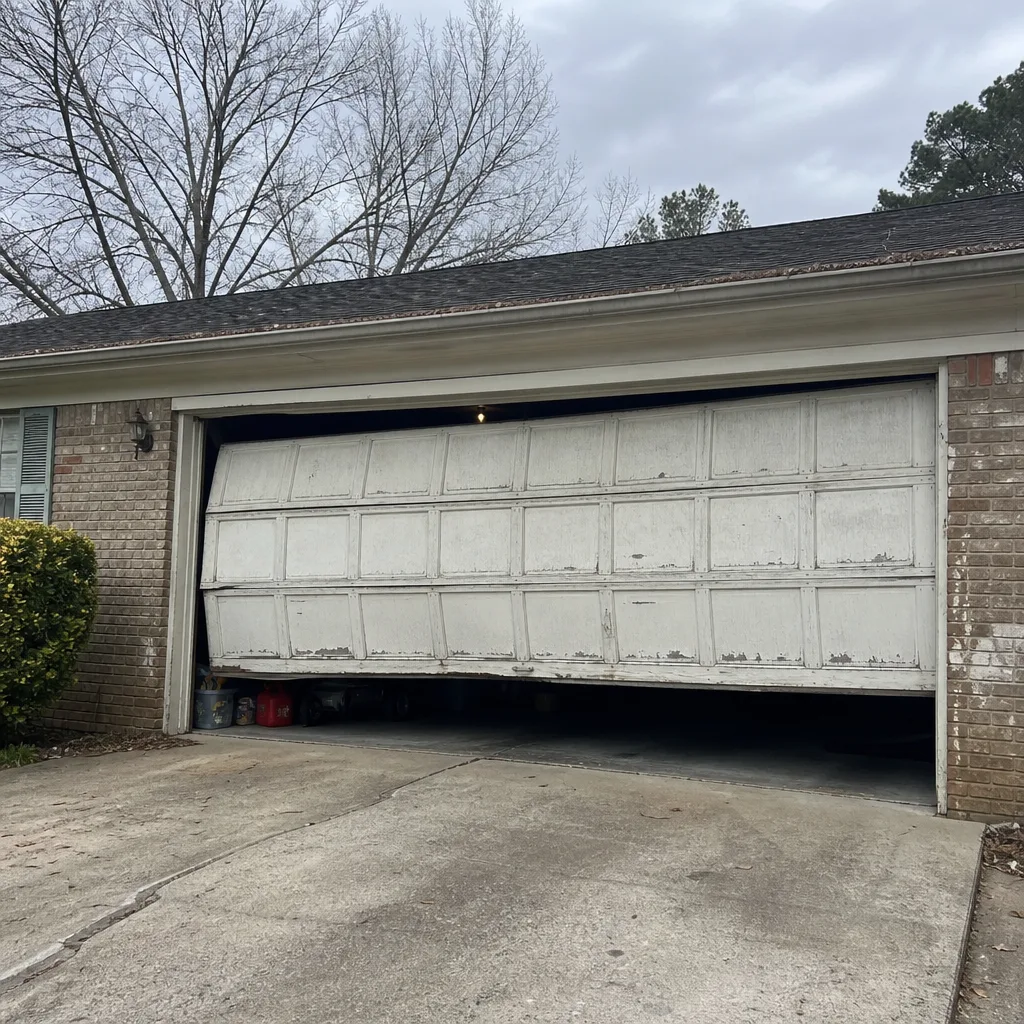 Before
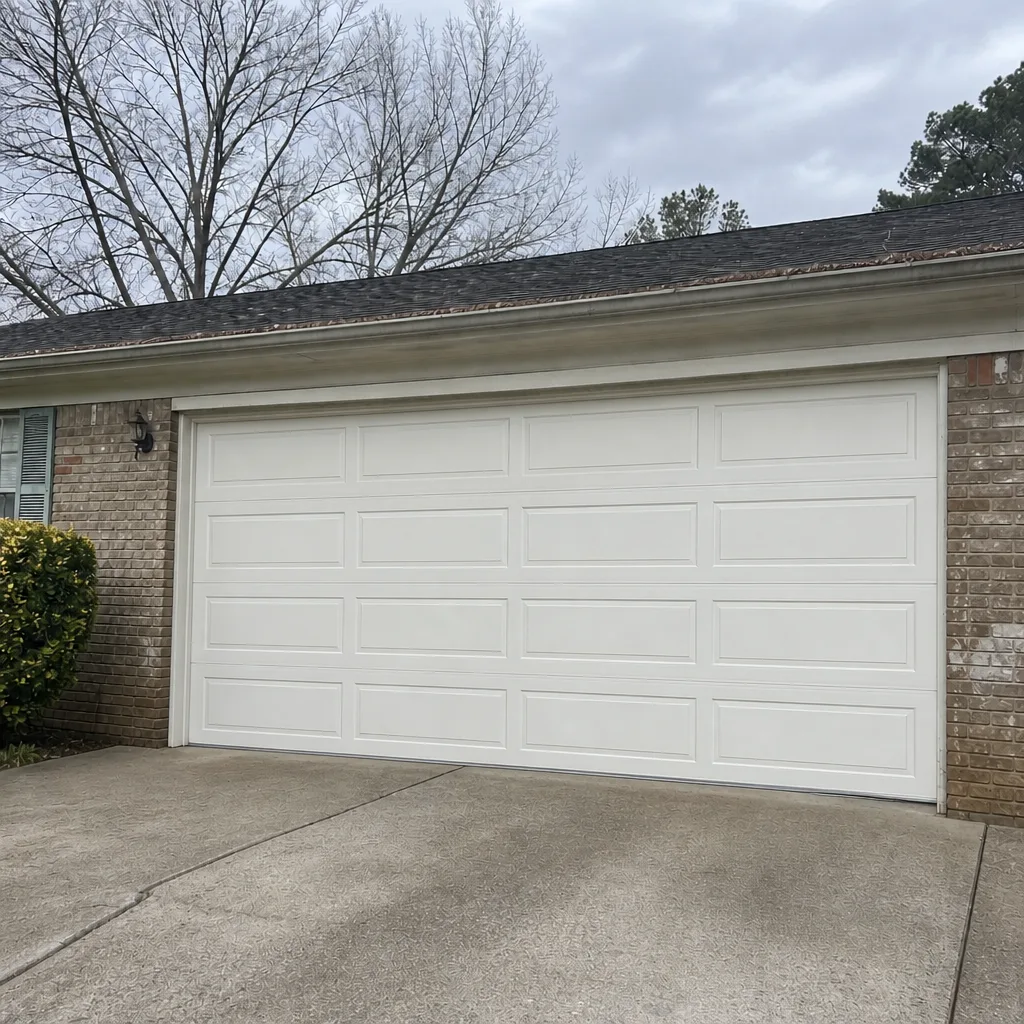 After
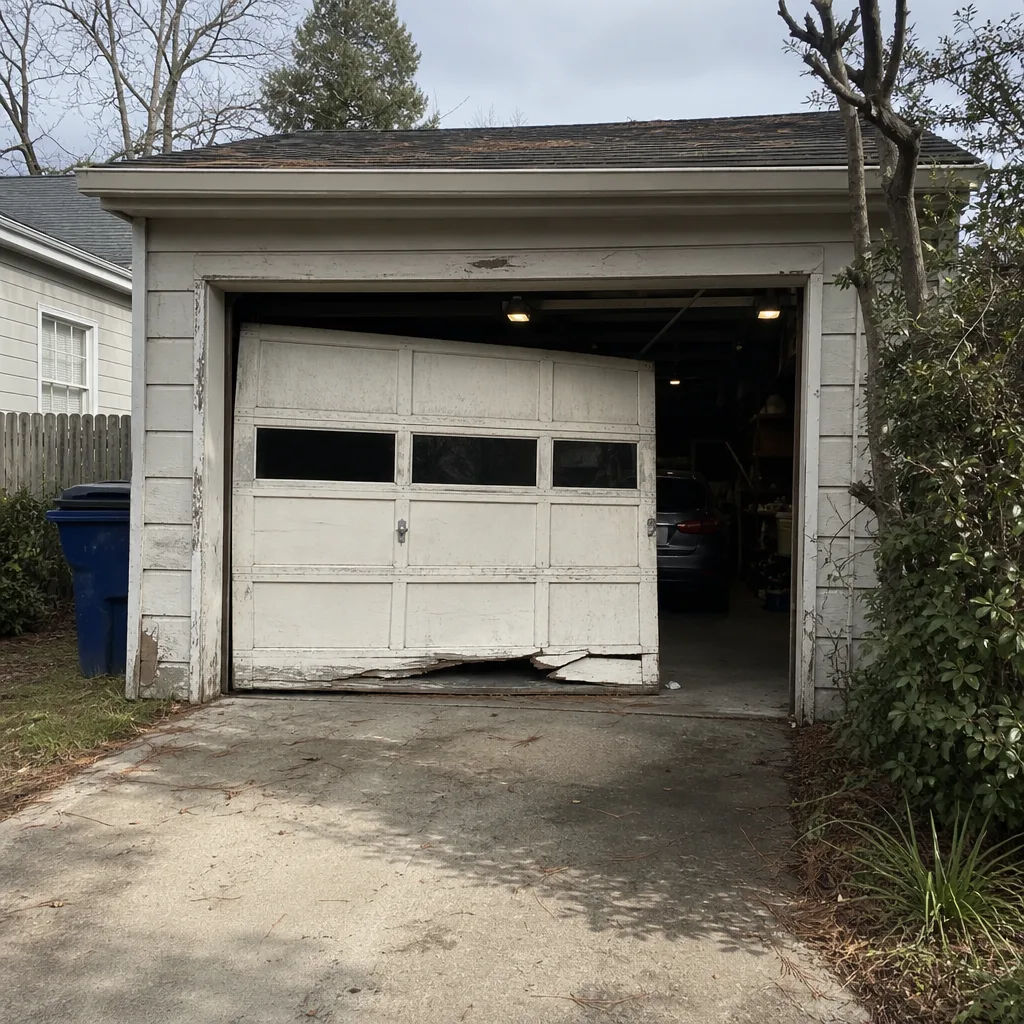 Before
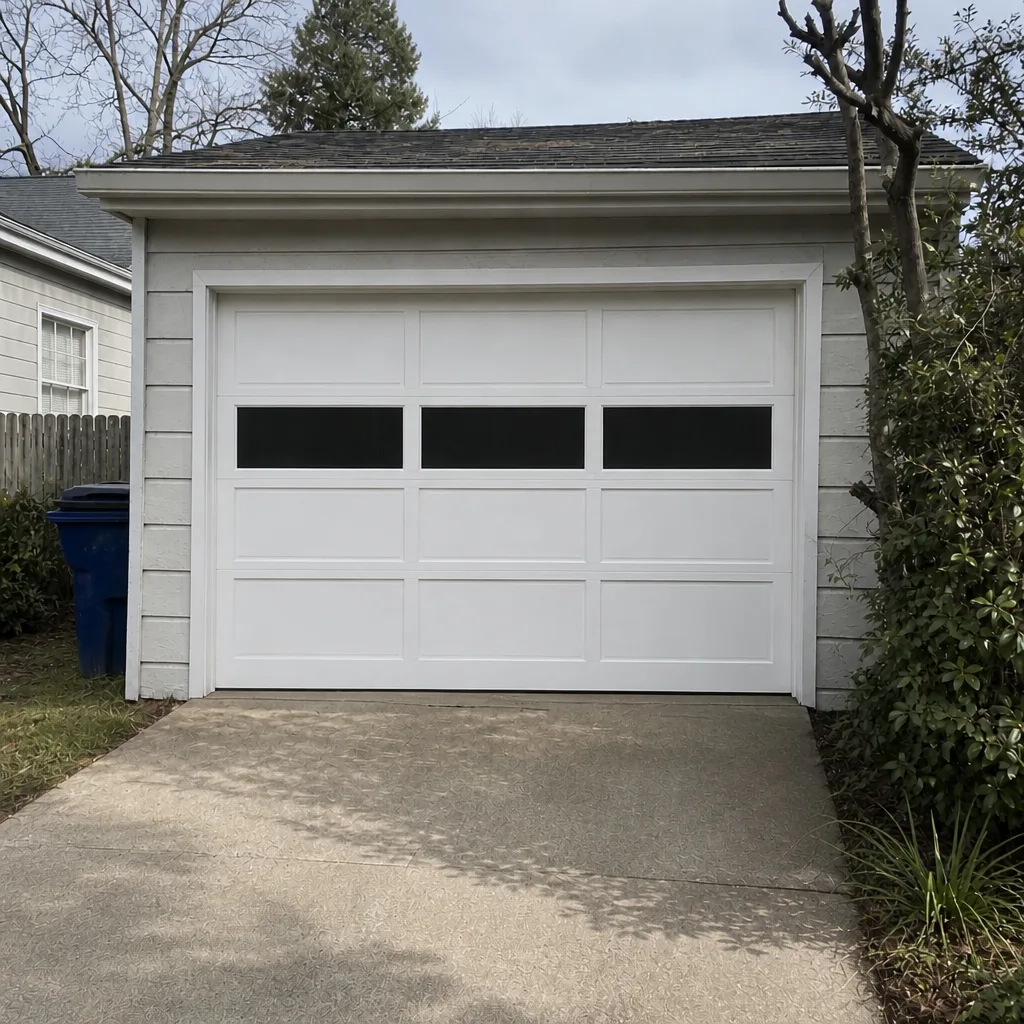 After
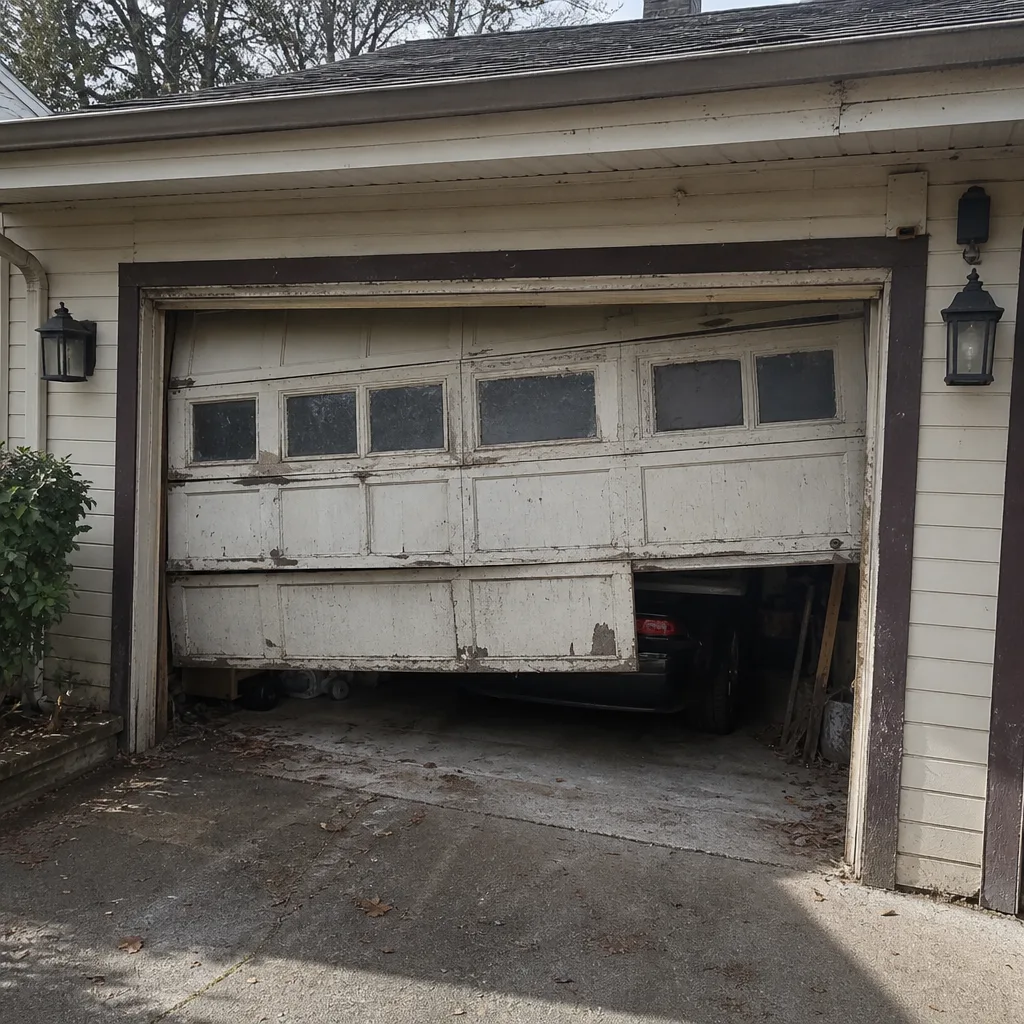 Before
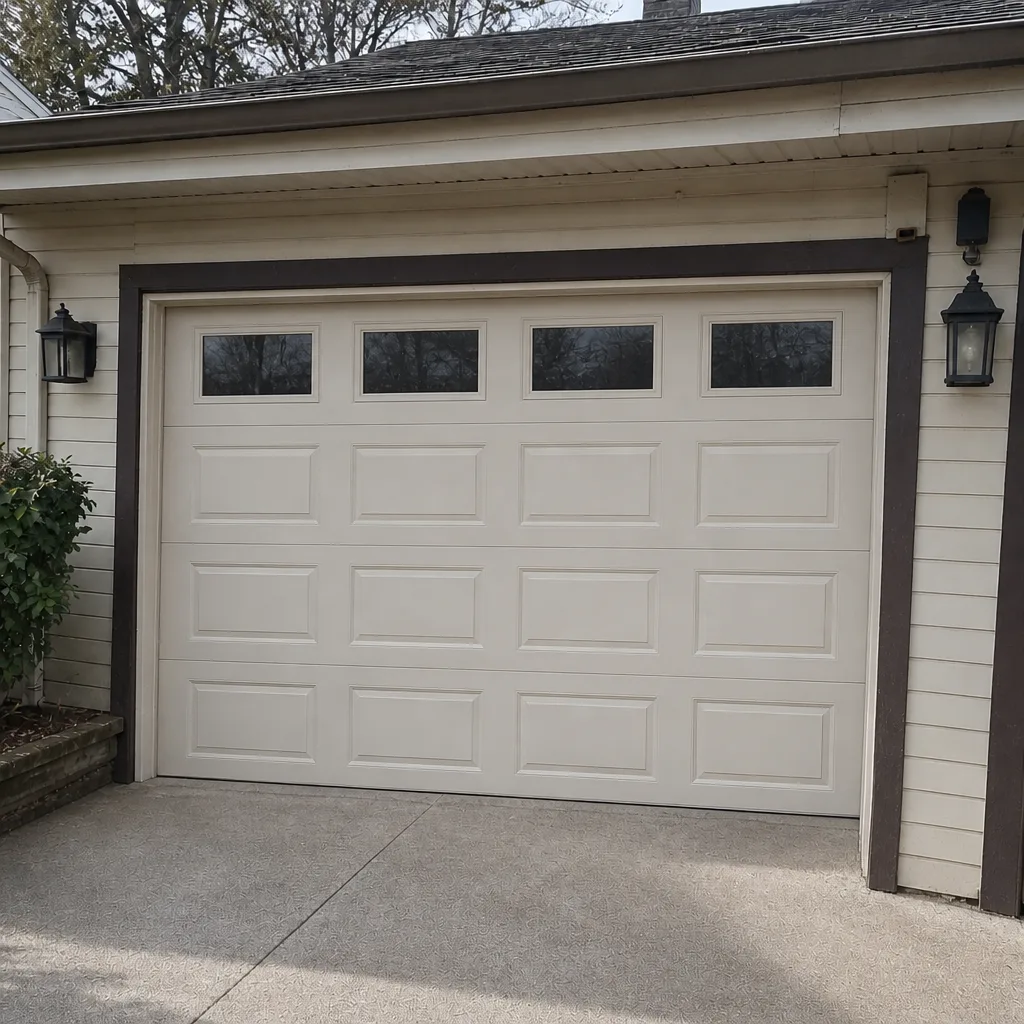 After
When to Call a Professional
Some things you can safely check yourself. Some things need a trained technician, full stop. Call for help when:
- You see a gap in a torsion spring, or you hear a loud bang from the garage with no obvious cause. A spring under load that releases suddenly can cause serious injury. Don’t attempt to fix it yourself.
- The door binds, drags, or comes off balance after a storm.
- Your opener behaves intermittently and the pattern isn’t clearly seasonal (if it’s not tied to heat, it’s not a heat problem).
- The bottom seal has hardened, split, or been torn by freezing ice.
- You’re not sure whether a repair is worth it or a new door is the smarter move. Installation and repair under one diagnostic approach means a straight answer instead of a sales pitch.
Our technicians have up to 15 years of experience on the eight brands most commonly installed in Durham homes: LiftMaster, Chamberlain, Genie, Clopay, Amarr, Wayne Dalton, Craftsman, and Raynor. That’s the whole system, opener and door. Repair, opener repair, and full installation. No handoffs to subcontractors, no “we don’t work on that brand” answers if it’s one of those eight. Durham Garage Door Service offers free estimates in Durham. Call (844) 460-7528. We answer 24/7. Fast dispatch from 7am to 7pm, Sunday through Friday.
Frequently Asked Questions
Once a year for a full inspection, plus a quick monthly check of your own. Spring is the highest-risk season for hardware failure and fall is the right time for lubrication and prep, so most Durham homeowners do best scheduling the professional inspection in early fall. If your door gets heavy use (multiple drivers, daily cycles), we recommend the professional inspection every six months, which lines up with April and October.
Because of the combination of pollen and temperature swings. After a mild Durham winter, the spring has seen light use, then April brings pollen that adds load to the door at the same time the overnight temperature is swinging 25 to 35 degrees. The spring that barely got stretched all winter goes through its heaviest load week just as fatigue becomes most likely. That pattern is why April is the month we get the most spring-failure calls in Durham.
No. Running the opener on a frozen door is one of the most common causes of opener gear damage we see in winter. Disconnect the opener first by pulling the manual release cord, break the ice at the bottom seal carefully with a plastic scraper or warm water, then re-engage the opener once the door is free. If you can’t do that safely, call (844) 460-7528 and we’ll walk you through it.
It can. Modern openers (especially LiftMaster and Chamberlain units with Wi-Fi radios) have control boards that sit near their thermal limit when the ambient garage temperature hits 100°F-plus. Intermittent remote failures, sluggish response, or a door that reverses without obstruction on hot afternoons are heat symptoms. That doesn’t mean the board is failing; it means it’s worth a diagnosis before the problem becomes a replacement. Call for a free estimate if the symptoms are consistent.
The easiest test: disconnect the opener and run the door by hand. If it moves smoothly and stays balanced, the door is fine and the opener is the issue. If it feels heavy, binds, or drops on its own, the door is the problem and the opener is working hard to compensate. Do this before you call, and you’ll know which service to ask for, which speeds up the entire visit.
Yes. Our technicians work on older mechanical openers as well as modern Wi-Fi units. Craftsman and Genie systems from past decades are still common in Durham and we service them regularly. Brand-specific diagnostic knowledge means we work on what you already own rather than pushing a replacement. If you have a brand not on our list of eight, call and we’ll tell you honestly whether we can help.
Don’t operate it until it’s been looked at. A bent track or bottom bracket can seem minor, but running the door forces the opener to fight an uneven load, which is how gears strip. Our technicians check bottom brackets and track alignment first after any storm because they take the most damage from wind-driven debris. Free estimate, no obligation.
The Bottom Line
Durham’s garage door problems aren’t the ones in your average guide. April brings spring failures because of pollen and temperature swings, not because of cold. Summer pushes openers harder here because of attached garage heat. Fall needs a lighter lubrication protocol than the north, because our freeze-thaw is intermittent. Winter brings frozen seals from freezing rain, not snow. And after any storm, the bottom bracket and track alignment are the first places to look. Build the monthly check, do a full fall prep, and know which calls to make yourself versus which ones to hand to a technician. On the spring, on anything under tension, and on storm damage, call the professionals.
Durham Garage Door Service works on all eight major brands, handles repair, opener repair, and installation in one place, and won’t try to sell you a new door when a repair is what you need. Call (844) 460-7528 for a free estimate. We answer 24/7. Fast dispatch from 7am to 7pm, Sunday through Friday. Closed Saturday.
Written by the team at Durham Garage Door Service.